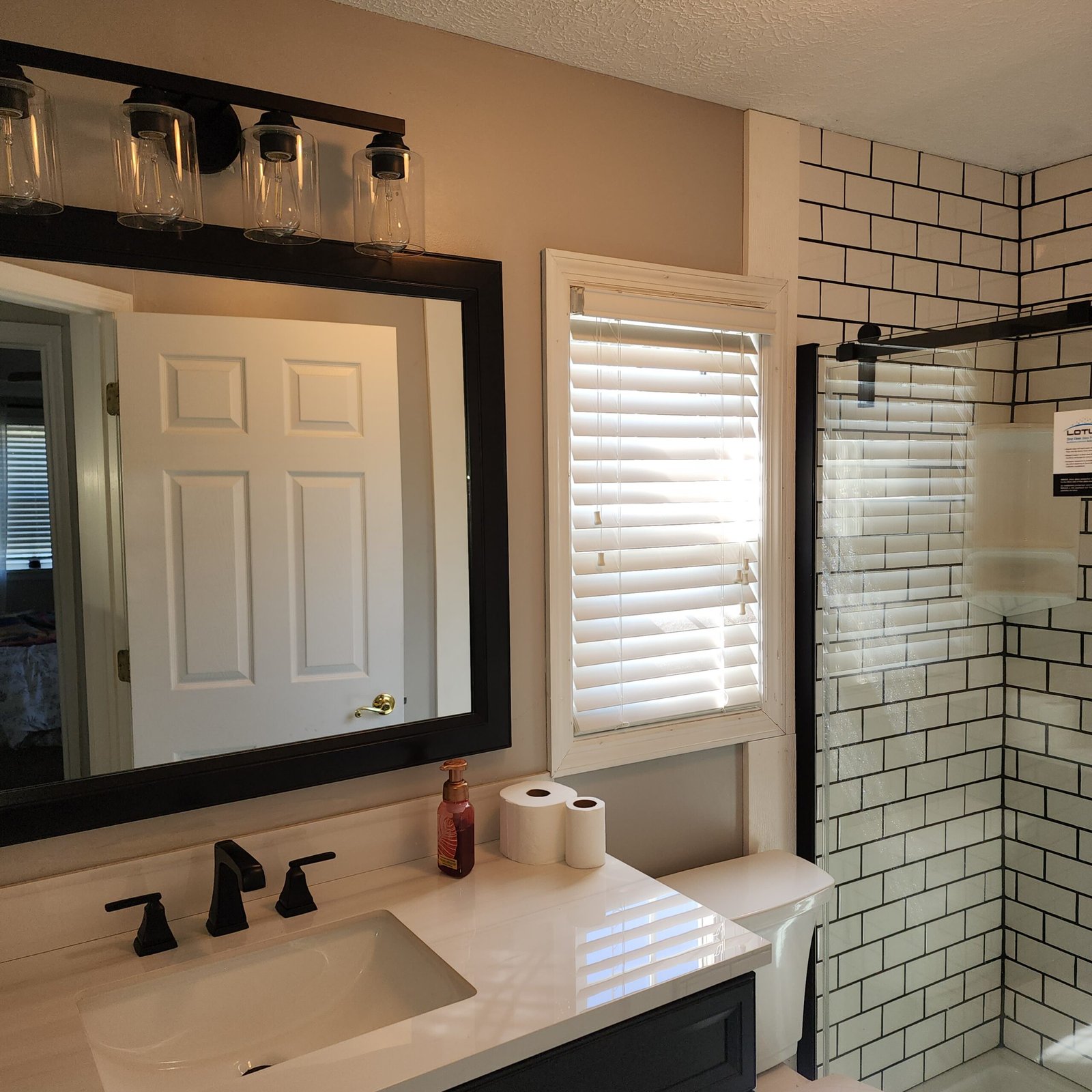
A useful bathroom mobility check starts with movement, not products. Watch how the person enters the room, approaches the toilet, crosses the tub or shower threshold, turns, reaches, and exits. Then match the physical work to the specific point where support, clearance, or a lower tub entry would help.
1. Start with the movement that feels difficult
Do not begin by picking a bar from a shelf or choosing a shower door from a catalog. Begin with the person who uses the bathroom.
Ask the person to describe the exact point where they want more support or easier access. Common examples include stepping over the side of a bathtub, lowering onto the toilet, rising from the toilet, turning inside a shower, or moving through a narrow doorway.
Placement should reflect natural reach and body position. A bar mounted where it looks symmetrical may not be where the user can reach it during the actual movement. If balance, strength, pain, recovery, or a medical condition affects the decision, an occupational therapist or another qualified health professional can help evaluate the movement. The National Institute on Aging notes that health professionals may assess a home and recommend changes when fall concerns are present.
2. Check the route into and through the bathroom
Walk the same route the user takes, including nighttime trips. Look for:
- loose rugs or mats that move underfoot;
- cords, scales, baskets, or furniture in the walking path;
- poor lighting between the bedroom and bathroom;
- a door that reduces usable floor space when open;
- wet flooring near the tub, shower, toilet, or sink;
- items stored too high or too low for comfortable reach.
The National Institute on Aging recommends good lighting, clear walking areas, firmly secured floor coverings, nonskid surfaces where water may be present, and bathroom grab bars near toilets and tubs or showers. These items work as a system. A grab bar does not correct poor lighting or a loose rug.
3. Review sitting down and standing up at the toilet
Watch the full transfer without rushing it. Does the user reach for the vanity, towel bar, toilet-paper holder, door frame, or wall? That improvised reach is useful information because it shows where the person expects support.
A towel bar is not a substitute for a properly selected and mounted grab bar. The installer must evaluate the wall, available structure, bar type, mounting system, fixtures, and clearances. The final position should also avoid interfering with the toilet lid, paper holder, door, or normal cleaning.
Need a grab bar installed where it supports a real movement?
EazyStep Bath installs grab bars in Jackson, Lexington, and nearby West Tennessee communities. Mike reviews the surface, structure, fixtures, reach, and clearance before drilling.
4. Study the tub or shower entry
The threshold is only one part of the movement. Review the approach, the first hand position, the step over the edge, foot placement inside the bathing area, turning space, and the exit.
For a bathtub, measure the practical step-over challenge rather than assuming a complete bathroom replacement is necessary. A compatible existing tub may be a candidate for a CleanCut Step installation, which removes and finishes a section of the tub wall to create a lower entry. Compatibility and site conditions control whether that option fits the tub.
For a shower door, review the opening width, swing or sliding path, curb, nearby toilet or vanity, and where the user places a hand when entering. A new shower door installation can improve enclosure function and appearance, but the door itself is not a support device. Door and grab-bar planning should be coordinated so hardware, glass, reach, and clearance do not work against each other.
5. Match the problem to the smallest useful improvement
Choose grab bars when
The main need is a reliable handhold during a defined movement near the toilet, tub, or shower. Wall construction and mounting conditions must be evaluated.
Evaluate a CleanCut Step when
The tub wall creates the primary entry obstacle and the existing bathtub is otherwise a reasonable candidate to keep in place.
Evaluate a shower door when
The enclosure needs a properly fitted door and the opening, curb, fixtures, and movement path can accommodate the selected configuration.
Some bathrooms need one change. Others need coordinated work. The point of the assessment is to avoid buying several products before identifying which physical movement each product is supposed to improve.
6. Ask these questions before work begins
- What movement are we trying to support or simplify?
- What is the finished wall or tub made from? Tile, fiberglass, drywall, and other surfaces require different planning.
- What structure or mounting system will carry the load?
- Will the new work interfere with a door, fixture, valve, shower door, or cleaning access?
- Can the user reach the proposed location naturally?
- What needs to stay dry, sealed, aligned, and easy to maintain?
- What is outside the installer’s scope? Clarify that before the appointment.
West Tennessee service considerations
EazyStep Bath serves homeowners in Jackson, Lexington, and nearby West Tennessee communities. Before scheduling, share the city, the service needed, photographs if requested through the private upload process, and a short description of the difficult movement. This helps determine whether the next step should be an installation visit or a conversation about compatibility and scope.
Bathroom mobility checklist questions
What should I check first in a bathroom mobility assessment?
Start with the exact movement that feels difficult. Then review the walking path, lighting, wet surfaces, toilet transfer, tub or shower entry, turning space, and the route back out.
Can a towel bar be used for support?
A towel bar should not be treated as a grab bar. A grab bar and its mounting system should be selected and installed for the intended support location and the actual wall conditions.
When might a CleanCut Step be considered?
A CleanCut Step may be considered when the existing tub wall is the main entry obstacle and the bathtub is compatible with the conversion. The tub material, dimensions, condition, and surrounding site conditions must be reviewed.
Does a shower door replace the need for a grab bar?
No. A shower door is an enclosure component, not a support device. Door selection and grab-bar placement should be coordinated around the user’s movement and the available structure and clearances.
Where does EazyStep Bath provide these services?
EazyStep Bath provides grab bar installation, shower door installation, and CleanCut Step bathtub installation in Jackson, Lexington, and nearby West Tennessee communities.
Plan the next step
Tell Mike what movement or bathroom feature needs attention
Choose grab bars, a shower door, a CleanCut Step installation, or “not sure yet” on the request form. EazyStep Bath will review the service request and follow up using the contact information you provide.
Sources and scope
- National Institute on Aging: Preventing Falls at Home, Room by Room
- National Institute on Aging: Home Safety Checklist
- CDC STEADI: Check for Safety
- CleanCut Bath product information
This article is an educational planning guide. It is not medical advice, an occupational-therapy assessment, a code-compliance determination, or a promise that a modification will prevent injury. Site conditions and the user’s needs control the final recommendation.