


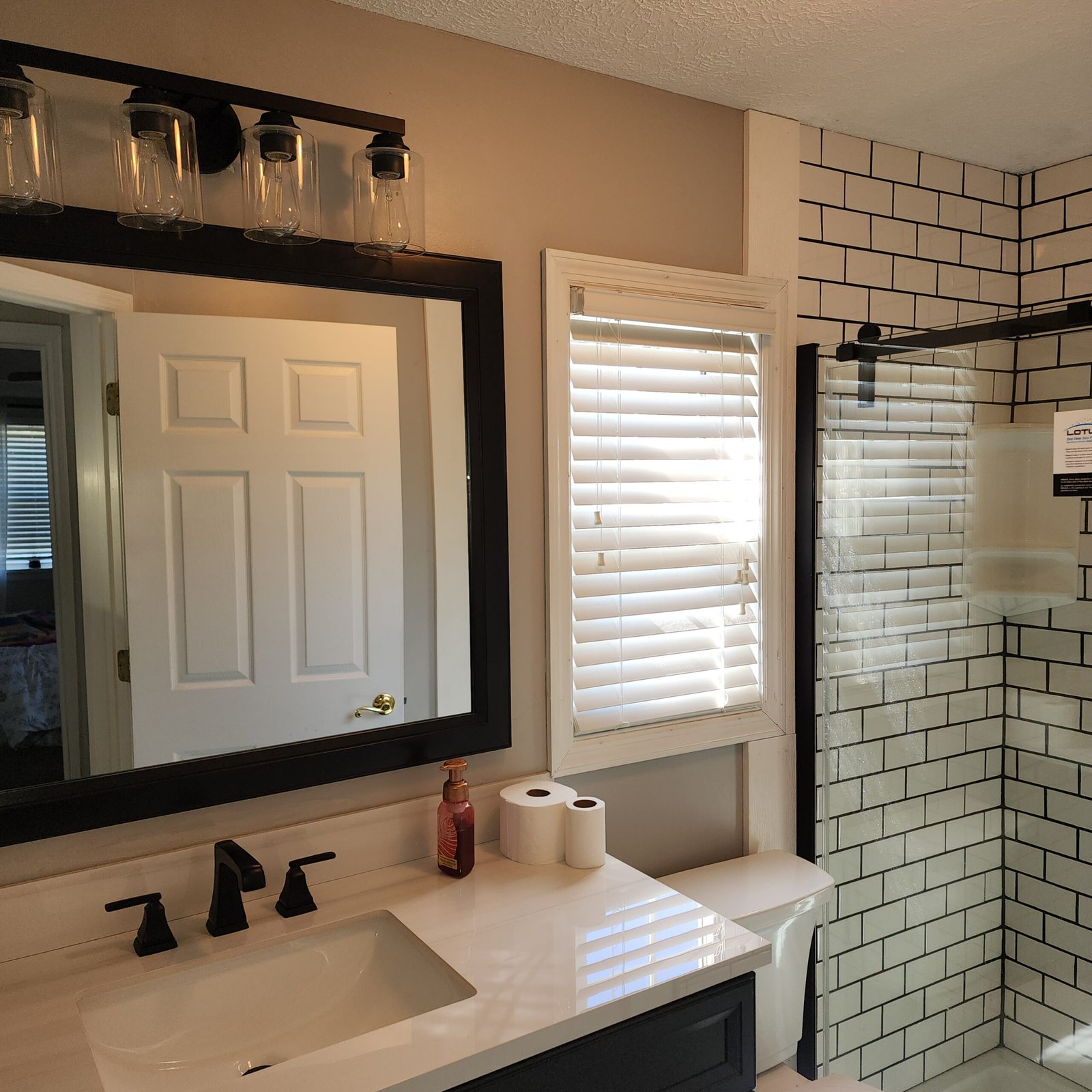
Check the whole route to the bathroom before choosing a light or bathroom product. Start where the trip begins. Look for dark spots, glare, shadows, loose cords, rug edges, wet floors, and tight turns. Check the normal nighttime setup, then make a separate plan for a power outage.
EazyStep Bath can review grab bar installation and bathroom remodeling needs across its Lexington, Jackson, and West Tennessee service area. Use these route notes to explain what needs to change in your bathroom.
1. Start where the bathroom trip begins
A check that starts at the sink misses the route into the room. Begin at the bed, chair, hall, or doorway the person normally uses. Include each turn, raised edge, door swing, and piece of furniture. Note where carpet meets hard flooring.
Review the route in daylight and after dark with the normal lights on. Do not ask anyone to cross a dark room to prove they can do it. If walking already feels uncertain, describe the problem and seek help rather than stage a test.
MedlinePlus advises keeping walking areas clear and well lit, leaving lights on at night, and removing loose cords between rooms.[27] Keep both parts of that advice in view. More light does not remove an object from the floor.
2. Check how the light reaches the path
From the start of each section, check whether the person can reach the switch before stepping into darkness. Include the bedside, hall, bathroom door, toilet, and tub or shower entry. A working ceiling light may still have a switch that is hard to reach.
Look from the height at which the person uses the room. Note glare from mirrors or glossy surfaces. Check whether a person, door, or shower curtain blocks the light. Record shadows where a foot needs to land, rather than guessing which new fixture would fix them.
Check for burned-out bulbs, dirty covers, closed shades, or objects in front of a light. The Administration for Community Living advises making light readily available when someone gets up at night.[28] That includes reaching the switch, not just seeing well after it is on.
The National Institute on Aging advises leaving a bathroom light on at night or using a night light that turns on in the dark. It also recommends lights and switches close to the bed.[22] Check where your chosen light actually reaches. One lit doorway does not prove the whole route is visible.
For new wiring, a hardwired fixture, an uncertain circuit, or questions about a bathroom-rated product, arrange an electrical review. This guide does not specify fixtures or decide whether a room meets electrical codes.
3. Make a separate plan for a power outage
A normal night light and an outage light have different jobs. Check the label or manual before counting on a plug-in light when power is off. A motion sensor alone does not tell you whether a light has battery backup.
The National Institute on Aging recommends keeping a flashlight by the bed in case the power goes out.[22] The CDC advises battery-powered flashlights and lanterns instead of candles, gas lanterns, or torches to reduce fire risk.[17]
Choose a known place for the light. Check that the person can reach it and use its switch. Note the battery type or charging method from its instructions. Turn it on as directed, but do not treat a brief test as proof that it will last through a long outage.
Write down which light serves the bedside, the route, and the bathroom. Keep equipment out of the walking path. Do not add a cord across the floor to solve a lighting problem. Show overnight guests where the lights are before bedtime.
If a person needs both hands for a walking aid or other support, include that need in the plan. Do not assume they can also carry a flashlight. Ask their care team to help with a workable routine. Keep the usual lights on while reviewing the plan; do not switch off household power or rehearse an unsafe trip in the dark.
Keep a charged phone near the bed, as NIA advises.[22] Bathroom lighting is one part of household outage planning. Follow official emergency directions and make separate plans for medical equipment, water, heating, and other needs.
Turn the route notes into a bathroom request
Tell Mike where the trip becomes difficult and what you want to change. EazyStep Bath can review a grab bar, tub entry, shower enclosure, or larger bathroom remodel. If photos are needed, use the private upload link supplied for your project.
4. Clear the route and check the space
Remove loose objects, but note why they were there. A basket in the doorway may point to a storage problem. A cord may power something used each day. A mat may be covering a spot where water reaches the floor. Moving it once does not resolve the cause.
Check for loose mats, raised rug corners, scales, wastebaskets, laundry, pet items, open drawers, and tight turns around furniture. Note how far the bathroom door opens. It must not trap a walking aid or block someone who needs to help.
Include the cane, walker, wheelchair, or other aid normally used, without asking for a risky demonstration. Space that works without equipment may not work with it. The bathroom mobility checklist covers doors, fixtures, surfaces, transfers, and daily routines in more detail.
5. Check the entry to the tub or shower
Look at the room from the door, beside the vanity, and near the bathing area. Can the person see the toilet, tub edge, shower threshold, mat, and wet floor? Note where a curtain, open door, or person blocks the view or light.
Record what the person reaches for when the path feels uncertain. Towel bars, sinks, door handles, and shower doors are not substitutes for a properly placed support device. A shower door is an enclosure part, not a support device.
Separate the tub-entry problem from the lighting problem. Better light does not lower a bathtub wall. The guide to bathtub step-over options explains what to review. For a handhold near a toilet, tub, or shower, use the grab bar placement guide.
6. Match each finding to the next step
Storage and loose items
Review clutter, cord routes, and storage conflicts. Check the path again when the room is back in normal use.
Lighting and electrical work
Record the dark area, switch, glare, shadow, and fixture. An electrical professional can review work beyond a suitable bulb change or moving an object that blocks the light.
Movement and vision
Seek qualified health advice when balance, vision, strength, pain, memory, recovery, transfers, or walking aids affect the task. An occupational therapist can assess how the person uses the room.[28]
Installation or remodeling
Ask for a site review for a handhold, difficult tub wall, shower enclosure, or larger room change. Product fit, mounting support, clearances, and the way the person moves must work together.
Keep a short record of the route, time of day, problem spot, and open questions. Take photos only from a dry, stable place. Use the pre-purchase bathroom guide to organize the notes. The West Tennessee planning guide explains how to prepare a local service request.
Bathroom lighting and walking-path questions
Where should a bathroom walking-path check begin?
Begin where the trip starts, such as the bed, chair, hall, or doorway. Include each turn and raised edge on the way to the toilet, tub, or shower.
Is a night light enough for the route to the bathroom?
Not always. Check whether useful light is available before each dark section. The floor, obstacles, turns, and fixtures need to be visible under normal nighttime conditions. Check battery backup separately for power outages.
Should I test the path with a walker or cane?
Include the aid normally used, but do not create a risky test. If the trip feels unsafe, describe the difficulty and seek help. A clear path without equipment may not leave enough space for the usual routine.
Can a shower door be used for support?
No. A shower door is an enclosure part, not a support device. Review the movement, useful handhold, wall support, and selected grab bar together.
Plan the next step
Ask Mike to review the bathroom work you need
EazyStep Bath provides complete bathroom remodeling, grab bar installation, CleanCut Step installation, and shower enclosures. Service covers Lexington and Henderson County, Jackson and Madison County, and nearby West Tennessee communities by appointment. Bathroom work takes place at your property. Electrical or clinical needs require their own review.
Review the service area Call EazyStep Bath Send the bathroom details
Sources and scope
- [17] CDC: What to Do to Protect Yourself During a Power Outage
- [22] National Institute on Aging: Preventing Falls at Home, Room by Room
- [27] MedlinePlus: Staying safe at home
- [28] Administration for Community Living: Avoiding a Fall
This is a planning guide, not medical advice, an occupational therapy assessment, an electrical inspection, a code ruling, or product approval. It does not promise to prevent a fall or injury. The person, normal routine, site, applicable rules, and exact product instructions determine the final plan.