


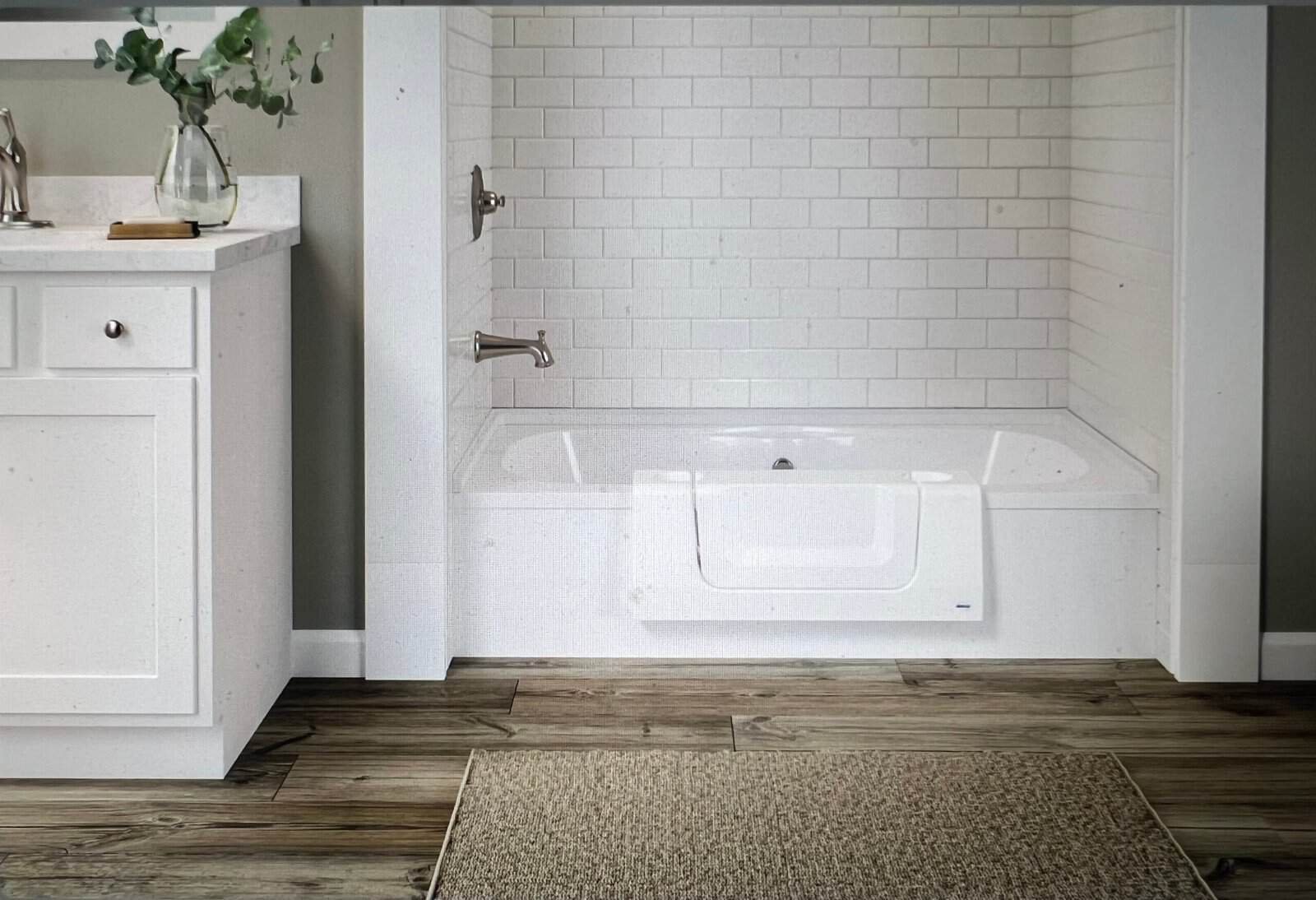
CleanCut lists acrylic, fiberglass, steel, and cast-iron tubs as materials that can accept a CleanCut Step. That is a material list, not approval of every bathtub made from those materials. The tub’s wall design, dimensions, existing layers, condition, and available support still have to work with the selected product.[21]
EazyStep Bath provides CleanCut Step installation at customer properties by appointment in its Lexington, Jackson, and nearby West Tennessee service area. Identifying the tub material helps start that conversation, but the actual tub needs an evaluation before an installation decision.
What each bathtub material means for compatibility
The installation guide currently linked from CleanCut’s sizing page names the same four materials below. It also gives separate considerations for cast iron and explains that support arrangements may need adjustment for the conditions inside the tub wall.[21]
Acrylic
Acrylic appears on CleanCut’s compatible-material list. An acrylic label does not identify the shape or dimensions of the rail, establish the tub’s condition, or confirm what is inside its wall. Those questions remain part of the installation review.[21]
Fiberglass
Fiberglass also appears on the list. The guide specifically notes that framing or support material inside the channel of fiberglass and other tubs may affect how the Step’s support structure is installed. A compatible shell still needs the prescribed support.[21]
Steel
Steel tubs are included. The review still needs to establish the condition of the tub and whether its rail fits the selected product. The guide requires inspection for existing damage before work begins, rather than treating the material name as enough information.[21]
Cast iron
Cast iron is included too. CleanCut recommends professional installation for this material and identifies additional cutting and dust-control considerations. A cast-iron tub is not automatically excluded, but it should not be approached as though its preparation were identical to every other tub.[1][21]
Do not identify the whole tub from its visible finish
CleanCut’s FAQ uses the word “porcelain” alongside fiberglass, acrylic, steel, and cast iron. Its Step installation guide lists acrylic, fiberglass, steel, and cast iron.[1][21] If the only description available is “a white porcelain tub,” leave the underlying construction as an open question. Do not turn a familiar surface description into a confirmed material diagnosis.
For an evaluation, gather any existing model information, purchase paperwork, or records of previous bathroom work. Note whether someone has installed a liner or refinished the surface. If the history is unknown, say so. A useful starting description is “the material is unconfirmed, and this is what we know about the tub,” rather than a confident guess.
Do not chip a finish, drill a test hole, or start a cut to identify the material. This article is a planning guide, not a cutting procedure. CleanCut’s installation instructions warn about potentially dangerous tools and possible utilities inside the tub wall.[21]
Not sure what your tub is made of?
Start with the existing tub, not a kit order
Tell EazyStep Bath what you know about the material, previous work, and the entry you want to change. Keep unconfirmed details on the list for review.
A liner changes the question
CleanCut does not recommend installing its product on a tub with a liner. Its FAQ explains that the material underneath may be unknown, heat from cutting a cast-iron tub can melt a liner, and cutting movement can loosen the liner.[1] That exception matters even when the original tub material would otherwise appear on the compatible list.
Do not treat “acrylic liner” and “acrylic tub” as interchangeable descriptions. If a liner is present, flag it before product selection. If a tub has been refinished rather than lined, record that as a separate condition for review. The sources reviewed here do not establish blanket approval for every aftermarket coating.
Shape and rail measurements still control the fit
A tub can have a listed material and an excluded design. CleanCut’s FAQ says its products cannot be installed in clawfoot-style tubs because of their single sidewall design. It describes the intended traditional tub wall as having inside and outside walls extending to the floor.[1] “Cast iron” therefore cannot settle whether a clawfoot tub is a candidate.
Size is another separate decision. CleanCut’s product-selection tool asks for depth, widest top rail, and widest bottom rail measurements. The Step comes in three widths based on rail thickness.[3][4] The overall length of the bathtub is not a substitute for these product-specific measurements.
Use the existing-tub candidate checklist for the wider review of wall shape, damage, opening location, and obstructions. For a comparison with other ways to change bathtub access, read the bathtub step-over alternatives guide.
What to clarify before making an installation decision
Keep a short record of the confirmed material, any liner or surface work, visible damage, the selected product, and measurements still needed. Ask how the Step will be supported and which conditions remain unverified. The manufacturer’s guide calls for a fitted support structure and recognizes that individual tub conditions can require adjustments.[21]
The useful outcome is a decision about your existing tub. A manufacturer material list can justify looking more closely. It cannot replace that inspection or promise that the project will proceed.
Bathtub material questions
Can a CleanCut Step be installed in a cast-iron tub?
Cast iron is listed in the CleanCut Step installation guide. CleanCut recommends professional installation for cast iron. The wall design, dimensions, condition, and support of the tub still need review.
Does an acrylic tub automatically qualify?
No. Acrylic is a listed material, but the material name does not establish the rail dimensions, wall design, condition, or support. Those details must be checked for the actual tub.
Can a CleanCut Step be installed over a bathtub liner?
CleanCut does not recommend installation on a tub with a liner. Its FAQ identifies unknown underlying material, possible heat damage to the liner, and loosening during cutting as concerns.
Is a cast-iron clawfoot tub compatible because it is cast iron?
No. The CleanCut FAQ excludes clawfoot-style tubs because of their wall design. A listed material does not override that design limitation.
Check the material and the actual fit
Ask EazyStep Bath about your existing bathtub
EazyStep Bath provides CleanCut Step installation for compatible tubs in Lexington and Henderson County, Jackson and Madison County, and nearby West Tennessee communities by appointment. Service takes place at the customer’s property. Request an evaluation before buying a product based only on the tub’s material.
Request a tub evaluation Call (731) 506-1336 See CleanCut Step installation
Sources and scope
- CleanCut: Frequently asked questions
- CleanCut: How to size and install
- CleanCut: Step product information
- CleanCut: Currently linked Step installation guide
Sources reviewed September 13, 2026. This guide explains material compatibility for planning. It is not an installation manual, inspection, or approval of a particular tub. Follow the current instructions for the selected product and verify actual site conditions. CleanCut is the product manufacturer; EazyStep Bath provides local installation.