


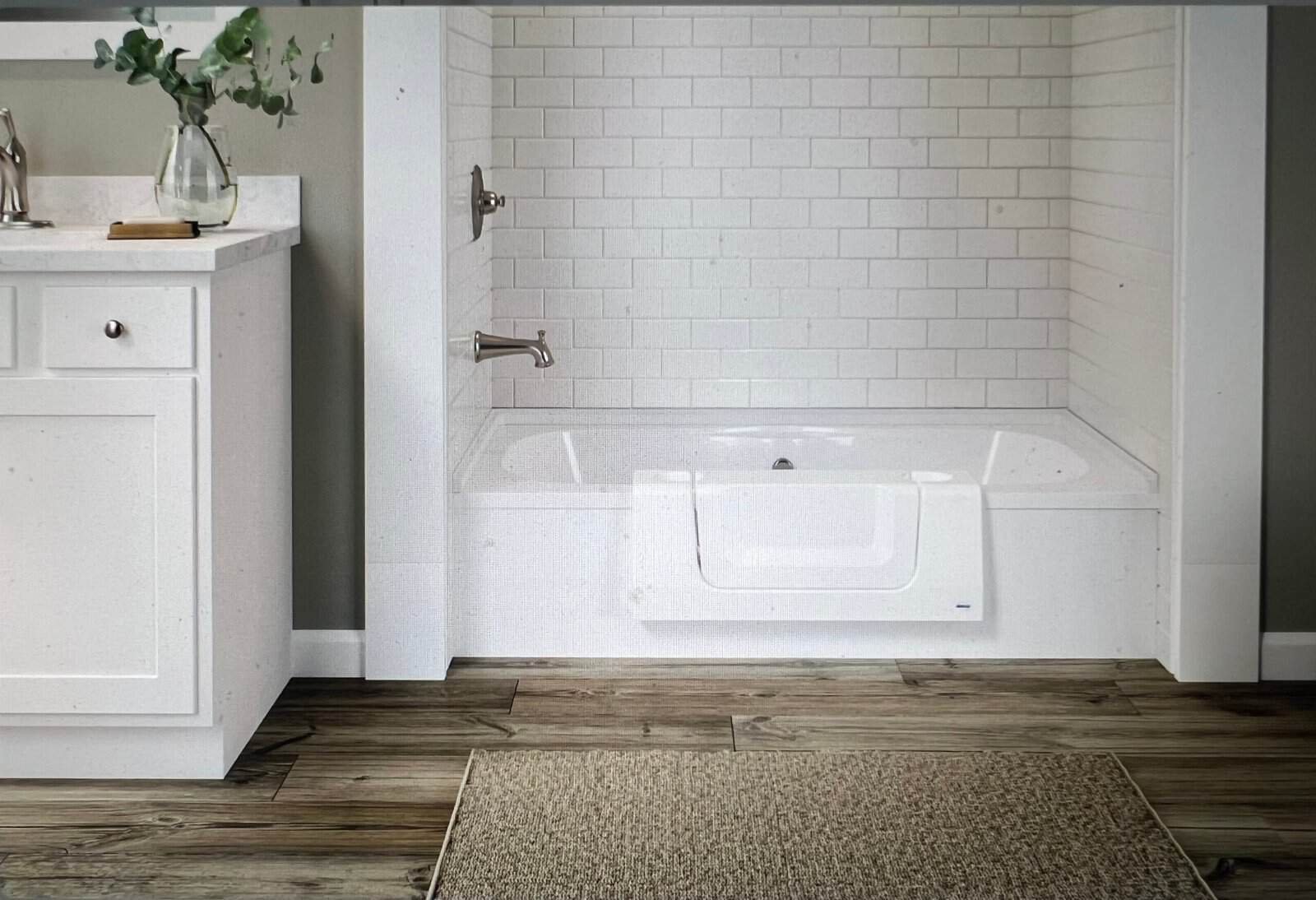
An existing tub may be a candidate for a CleanCut Step when it has a conventional two-sided tub wall, fits a current Step size, is in serviceable condition, and has a workable opening location. Material alone does not settle the question. Measurements, tub shape, damage, liners, jets, shower-door tracks, nearby fixtures, and the household’s intended use can change the answer.
EazyStep Bath evaluates existing tubs for CleanCut Step installation at customer properties across its Lexington, Jackson, and West Tennessee service area by appointment.
1. Start with a quick candidate screen
A promising candidate usually passes several basic checks. The tub has an inside wall and an outside wall that extend down toward the floor. There is enough uninterrupted sidewall for the planned opening. The rail dimensions fall within the requirements for one of the current CleanCut Step sizes. The tub does not show damage or movement that needs a separate repair decision. Plumbing, wiring, jets, an enclosure track, or a nearby fixture does not occupy the proposed cut area.
The intended result matters too. The Step leaves an open passage in the tub wall for shower use. If someone in the household still needs to fill the tub for bathing, the Step itself does not preserve that function. The broader guide to what a CleanCut bathtub conversion changes explains the difference between an open Step and a removable-center configuration.
A tub can pass the photo screen and still fail after measurement or inspection. That is normal. The first screen is meant to decide whether an evaluation is worthwhile, not to authorize a cut.
2. Does the tub have the right kind of wall?
CleanCut’s current FAQ says its products are designed for traditional-style tubs with a rail made of an inside wall and an outside wall that extends to the floor. The same FAQ says clawfoot tubs are not compatible because their sidewall construction and elevated design differ from that layout.
Other shapes need a closer look. Garden tubs vary widely. A deep deck, curved side, pronounced flare, decorative panel, or changing wall thickness may leave no suitable location even when the tub material appears on a general compatibility list. The opening also needs to fit where a person can approach it. A vanity, toilet, fixed seat, or narrow floor area may force a different location or make the proposed movement impractical.
Take one photo of the whole fixture before taking close-ups. Include the floor in front of the tub and both ends of the sidewall. A tight picture of the rail may hide the exact room conflict that controls the decision.
Want a tub screened before you plan the project?
EazyStep Bath can review clear photos, the property location, the tub’s intended use, and any known liner, jet, or enclosure conditions before scheduling a site evaluation.
3. Compatibility depends on measured rail dimensions
The CleanCut Step is sold in three widths based on tub-rail thickness. The manufacturer’s current installation guide tells the installer to confirm fit by measuring the top rail and the rail farther down the tub wall. Its sizing tool also asks for the shortest depth, widest top rail, and widest bottom rail before it returns matching products.
Those are product-fit measurements, not a license to cut. The wall can taper, curve, or change thickness along the intended opening. The inside basin may also be irregular. CleanCut’s installation guide accounts for that irregular shape during final fitting, which is another reason a single tape-measure reading is not enough.
Record measurements carefully, but treat them as preliminary until the exact product instructions and tub location are reviewed together. Do not assume that a tub is standard because it is a familiar length or came from a common home style. Material-specific questions deserve their own review. This checklist stays with the whole-tub decision.
4. Tub condition and prior alterations can stop the plan
The manufacturer’s installation guide begins tub preparation with an inspection for existing chips, markings, and other damage. For a homeowner, the useful lesson is broader: document cracks, flexing, corrosion, soft areas, loose panels, old repairs, and unexplained staining before anyone treats the tub as ready.
A liner is a specific warning. CleanCut’s current FAQ does not recommend installation on a lined tub. The manufacturer points to uncertainty about what is under the liner, possible heat effects when the underlying tub is cast iron, and movement during cutting that could loosen the liner.
Jets also change the scope. The FAQ says installation on a jetted tub may be possible after professional review, but the jets would need to be capped and would no longer function if the conversion proceeds. A household that still uses those jets needs that consequence stated before selection, not discovered during the work.
Material remains relevant, but it is not an automatic pass. CleanCut’s guide identifies acrylic, fiberglass, steel, and cast iron as tub materials on which the Step can be installed. It also gives cast iron a different cutting method and recommends professional installation. The final decision still depends on the exact tub, measurements, condition, construction, and site.
5. The enclosure and surrounding room are part of compatibility
A sliding tub-door track commonly occupies the same top rail that needs to be opened. CleanCut’s FAQ says sliding doors must be removed before installation and cannot be put back after the conversion. A shower curtain is the manufacturer’s suggested replacement. That is a meaningful change to the bathing setup, so it belongs in the compatibility discussion.
Check fixed glass, frames, wall returns, trim, faucets, supply lines, drains, wiring, and access panels. Then look outside the tub. The new opening should not send the user into a vanity corner, a toilet, stored items, or an area without enough dry-floor room for the planned movement. A shower door, glass panel, or handle is an enclosure component, not a support device. If a separate handhold is needed, evaluate a purpose-built grab bar and its mounting conditions on its own terms.
The room review also needs a practical work path. An installer must be able to protect the area, use the required tools, control debris, and fit the support structure and insert. The business address at 5340 Poplar Springs Bargerton Rd. in Lexington is not a walk-in showroom. EazyStep Bath performs bathroom service at the customer’s property by appointment.
6. Confirm what the household expects after the conversion
Write down the intended use before selecting the product. If the tub will become a step-through shower, an open Step may fit that goal. If the household must retain full-depth bathing, pause and compare the appropriate product configuration rather than assuming the opening can simply be closed later.
Then review the whole movement. A lower section of tub wall does not remove the entire threshold, create a level-entry shower, repair a damaged fixture, relocate controls, or supply a handhold. The Bathtub Access Guides hub compares a tub-wall cutout with other categories when the difficult movement calls for a different solution.
A sound decision is often a short one: proceed to measurement, hold for more information, repair another condition first, or choose a different project. Compatibility is not a sales label. It is the result of matching the tub, product, room, and intended use without ignoring a known conflict.
CleanCut Step compatibility questions
Can a CleanCut Step be installed in any bathtub material?
The CleanCut installation guide identifies acrylic, fiberglass, steel, and cast iron tubs, but material alone does not confirm compatibility. The tub still needs suitable dimensions, construction, condition, opening location, and site access.
Can a CleanCut Step be installed on a tub with a liner?
CleanCut does not recommend installing its products on a lined tub. The manufacturer cites uncertainty about the underlying fixture, possible heat effects with cast iron, and movement that could loosen the liner.
What happens to sliding tub doors?
CleanCut says sliding doors must be removed before installation and cannot be reinstalled afterward. The enclosure plan should be settled before the conversion proceeds.
Are photos enough to confirm CleanCut Step compatibility?
No. Photos can identify obvious conflicts and help prepare for a visit, but the actual tub must be measured and inspected against the current product requirements before final approval.
Check the tub before selecting the insert
Ask Mike to evaluate the existing bathtub
EazyStep Bath evaluates CleanCut Step requests at customer properties in Lexington, Jackson, Henderson County, Madison County, and nearby West Tennessee communities by appointment. Final suitability depends on the tub shape, measurements, condition, enclosure, intended use, room access, and site conditions.
See CleanCut Step installation Call EazyStep Bath Request a tub evaluation
Sources and scope
- CleanCut: Step product and sizing overview
- CleanCut: product compatibility FAQ
- CleanCut: sizing and product-selection resources
- CleanCut: Step installation guide
This compatibility checklist is educational. It is not a product approval, structural inspection, medical recommendation, code determination, or promise that a conversion will prevent a fall or injury. CleanCut is the product manufacturer. EazyStep Bath provides local installation and does not claim manufacturer endorsement, certification, dealership status, or affiliation. Current product instructions, the user’s needs, the actual tub, and site conditions control the final decision.