


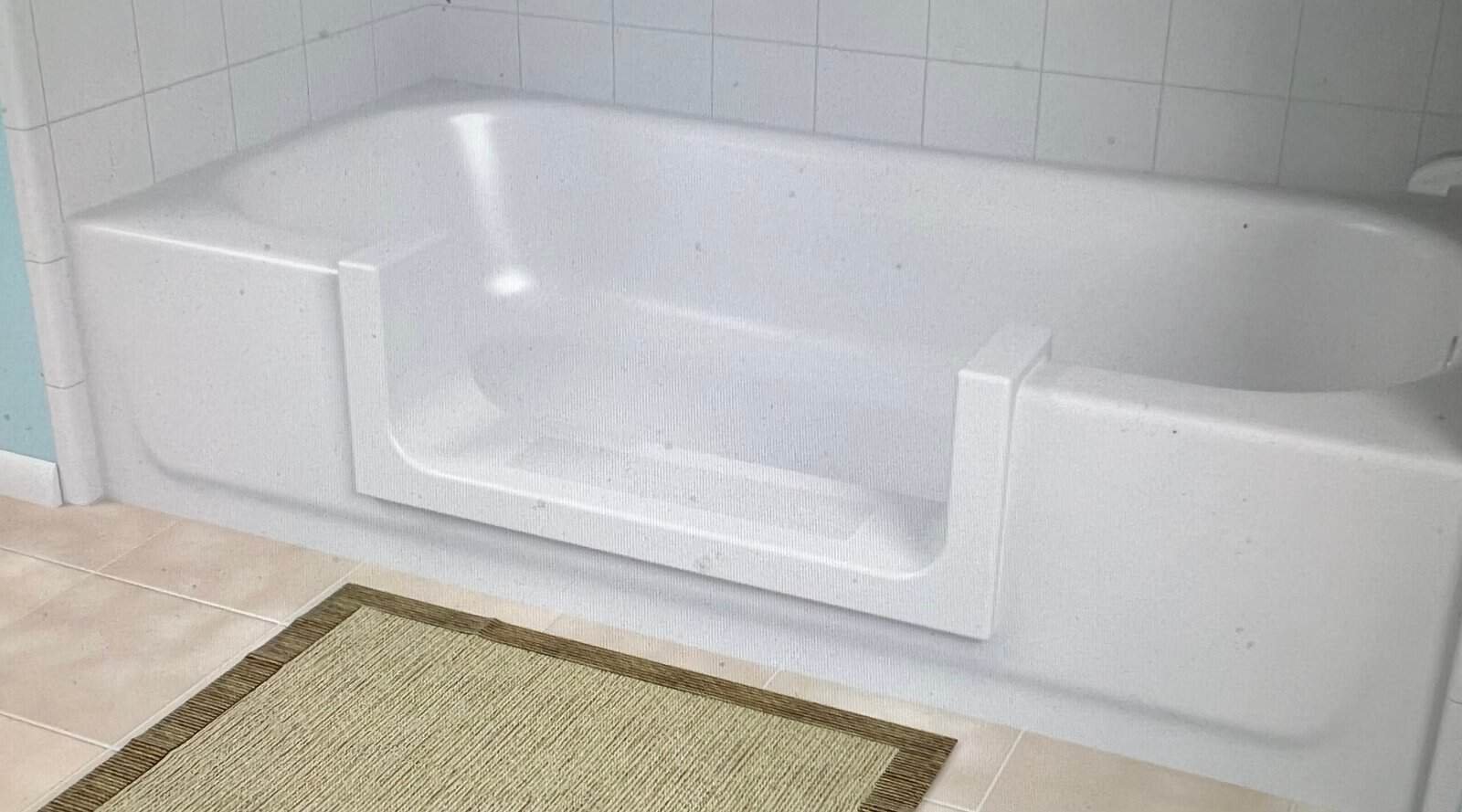
Water management around a bathtub cutout starts with the shower curtain, the seal around the insert, and the way the tub is used. For the CleanCut Step, close the curtain before turning on the water and do not fill the tub above the opening. Check the seal before first use and every six months after that, as the maker directs.[8]
EazyStep Bath provides CleanCut Step installation in Lexington, Jackson, and nearby West Tennessee communities. Check the service area and include your curtain setup and any known leaks when asking about a tub conversion.
Know which opening you have
This guide covers care around an open CleanCut Step. It is not a guide to filling a tub fitted with a removable plug. Keep the exact product name and the care sheet from your installation. If you are unsure which model is fitted, ask before using it as a bath.
The CleanCut model comparison explains the different uses. For a broader choice between a cutout and other changes, start with the Bathtub Access Guides hub. Here, the question is how to plan routine care and what to report when water appears outside the tub.
Settle the curtain before the first shower
CleanCut recommends closing the shower curtain fully before turning on the water to prevent splashing outside the tub.[8] Ask the installer to show how the curtain should hang at the new opening. Review both ends and the lower edge, not just whether the curtain spans the full tub.
Keep the person’s usual bathing setup in that discussion. Show where a shower seat sits, how the curtain passes it, and where the handheld spray rests. Ask how to close the curtain without blocking the planned entry or exit. Do not ask someone to demonstrate a difficult step or transfer just to test the layout.
A wet floor is a reason to review the setup, not proof that the insert itself leaks. Note whether water appears near a curtain end, beside the opening, or farther away. These notes help explain the problem, but they do not identify a hidden leak. Do not keep running the shower to recreate a puddle for a photograph.
Keep the open tub from being filled
The care sheet says not to fill the tub above the Step opening.[8] Make that limit clear to everyone who uses or cleans the tub. A person used to the old bathtub may not know that the bathing setup has changed.
The Step installation guide recommends removing the tub stopper to help prevent accidental filling.[5] Ask the installer to explain the drain setup at handover. Do not assume that leaving a stopper nearby is harmless, or that a towel across the opening can restore full-bath use.
Plan the shower setup with the cutout
Tell EazyStep Bath how the tub is used and what enclosure is there now. Include known water problems before the work is scoped.
Review CleanCut Step installationInspect the seal without changing it
CleanCut calls for a continuous bead of caulk around the insert, with no cracks or missing areas. Its care sheet directs an inspection before first use and every six months afterward.[8] Put that check on a household calendar and keep the care sheet where you can find it.
Look from a dry, stable position. If part of the seal is hard to see or reach, ask the installer to check it rather than leaning over the tub or taking the insert apart. Report a gap, crack, loose section, or new damp patch. Do not cover it with another product before the cause and repair method have been reviewed.
The installation guide calls for sealing the full perimeter with the supplied adhesive and checking the harder-to-see bottom edges with a mirror.[5] That is a useful handover question: ask what was checked and whom to contact if the seal changes. It is not a reason to scrape out a sound joint as part of normal cleaning.
Use the care sheet for cleaning and first use
For the Step, CleanCut says not to use the tub or put weight on the product for two days after installation while the adhesive dries. It also directs cleaning and rinsing before first use to remove remaining dust.[8] Get the permitted return-to-use time in writing and arrange another way to bathe during that wait.
For routine cleaning, the care sheet calls for a gentle household cleaner and says not to use harsh cleaners or abrasive tools.[8] Check a proposed cleaner against the instructions for the installed product. A cleaner used elsewhere in the room is not automatically suitable for the insert or its seal.
If the instructions supplied at handover differ from an online sheet, have the installer resolve the difference before use. Keep the product details and written answer together. The conversion and installation guide covers the broader work sequence and preparation.
Respond to dampness rather than hiding it
Dry a wet floor promptly when you can do so safely. Keep others away from the wet area, and stop using the fixture if water keeps escaping or you suspect a leak. Record when you first noticed it and where it appeared. Include nearby stains or damaged finishes in the report without guessing what caused them.
EPA advises fixing plumbing leaks and other water problems as soon as possible and drying items fully. It also warns against painting or caulking moldy surfaces.[6] Adding sealant over a damp or stained area is not a substitute for finding the water source.
For room moisture, EPA recommends running the bathroom fan or opening a window when showering.[6] That advice does not replace a repair for water leaking onto or beneath the floor. If hidden damage or mold is suspected, ask an experienced professional to assess it. This guide does not establish that EazyStep Bath provides mold cleanup.
Questions about water around a tub cutout
Can I fill a tub with an open CleanCut Step?
Do not fill it above the opening. The Step care sheet states that limit. Ask the installer to explain the drain setup and make sure everyone using the tub understands the change.
How often should I check the seal?
CleanCut directs a check before first use and every six months afterward. Look for a continuous bead with no cracks or missing areas. Report a problem sooner if one appears.
Does water on the floor prove the cutout seal has failed?
No. Note where and when the water appears, stop use if it keeps escaping, and arrange a review. Curtain position and the seal both need attention, but a wet floor alone does not identify the cause.
Sources
Reviewed October 19, 2026. Follow the instructions for the installed product. These sources do not establish the condition of a particular bathroom or a manufacturer affiliation for EazyStep Bath.
Ask about your tub and shower setup
EazyStep Bath serves Lexington, Jackson, Henderson County, Madison County, and nearby West Tennessee communities by appointment at your property. Describe the existing tub, how you want to use it, and any known leaks before planning a CleanCut Step installation.
Explore CleanCut Step installation Request a tub evaluation Call (731) 506-1336