


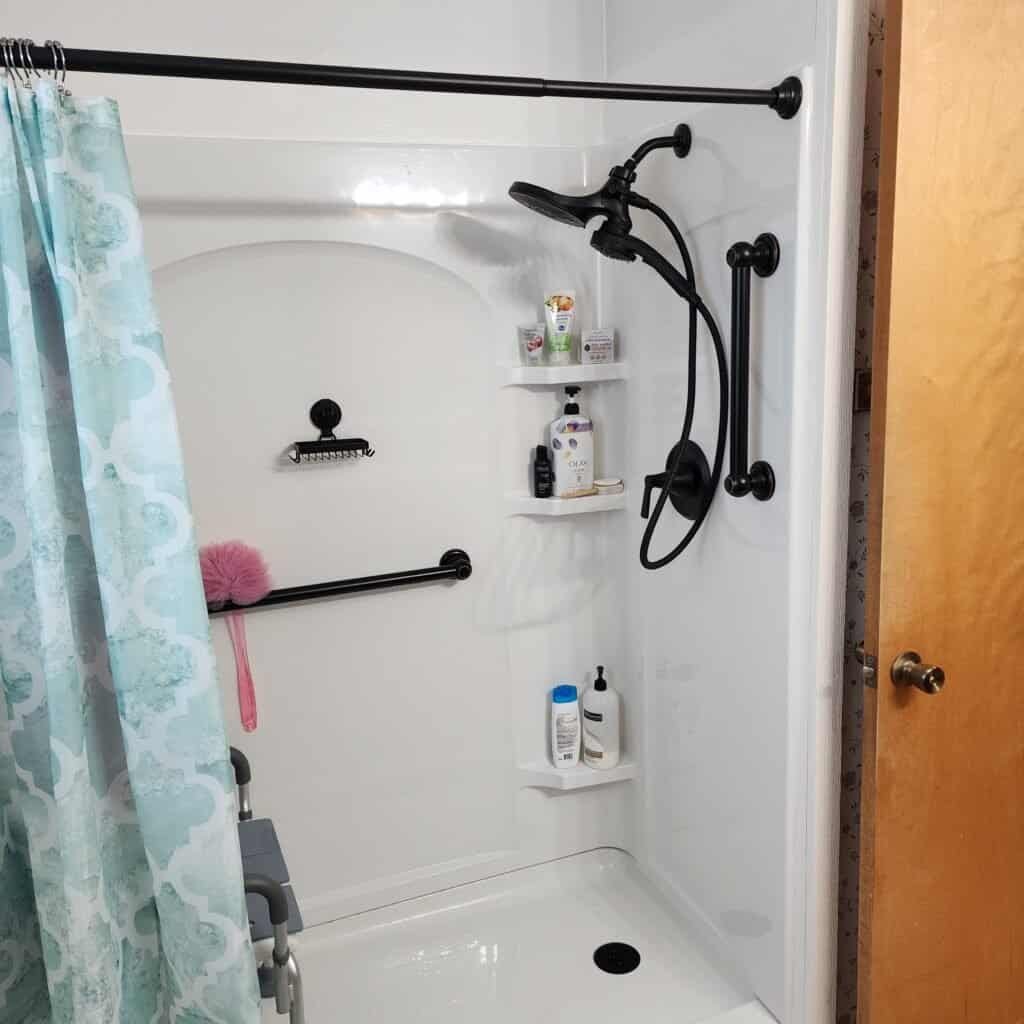
A grab bar can be installed on a suitable fiberglass tub or shower surround, but the visible panel is not enough to approve the job. The installer needs to check the space behind the surround, the available support, and the instructions for the exact mounting system. A stud-mounted system designed for fiberglass addresses the gap between the panel and the framing.[1]
EazyStep Bath reviews grab bar installation requests in Lexington, Jackson, and nearby West Tennessee. Check the service area and describe your existing surround when asking about an appointment at your property.
Why the gap behind the surround matters
A molded enclosure can have space between its finished face and the wood framing. The Solid Mount manufacturer describes its fiberglass mounting system as a way to bridge that cavity and transfer the grab bar load to a wood stud rather than relying on the fiberglass panel.[1] That is a specific installation approach, not a promise that every surround can accept the same hardware.
Finding a stud answers only part of the question. The installer also needs to know how the selected system connects the bar to it across the gap. Do not assume that a longer screw, tightened against the surround, is an equivalent substitute for the specified mounting assembly.
For the homeowner, the useful question is: what will carry the load at each attachment point? Ask for an explanation of the proposed system before choosing the bar. The broader guide to grab bars on different wall surfaces compares finishes. This article focuses on the cavity and fit questions in an existing molded tub or shower surround.
Check the exact product, not the word fiberglass
Bring the enclosure brand and model to the project discussion if you know them. Keep any installation manual or renovation photographs. If you do not know whether the surround is fiberglass, acrylic, or another material, say so. A photograph may help start the review, but it does not establish the hidden assembly.
Ask the installer to identify the proposed bar and mounting product together. Useful review questions include:
- What support is available behind each proposed mounting point?
- Does the exact mounting system permit this wall material and cavity?
- Will the flange sit properly at the proposed position, away from interfering curves, shelves, or seams?
- What access or wall work might be needed if the original position cannot be used?
- How will the penetrations be sealed under the selected instructions?
The GrabBars.com fiberglass installation guide illustrates why the instructions must stay tied to the system. Its method uses Solid Mount anchoring devices and calls for attachment to wood studs. It also specifies silicone sealing around the mounting assembly.[2] Do not extract a drilling size or screw choice from one guide and apply it to a different mounting product.
Unsure what is behind your surround?
Describe the tub or shower, the proposed handhold area, and any known wall work. EazyStep Bath can use those details to begin a grab bar installation discussion.
Keep useful placement separate from mounting access
Describe the movement you want help with before marking a final location. Is the difficulty at the tub entry, beside the shower controls, or somewhere else? Note which hand is available and what blocks the approach. There is no need to attempt a difficult movement or transfer for the sake of gathering information.
Then ask whether the useful area and the available mounting positions can be reconciled. A location should not be selected only because it is easy to fasten. Equally, a comfortable-looking mark on a photograph is not proof that the wall can accept the proposed hardware. Start with the grab bar placement planning guide if you have not yet described the task.
Keep shower-door handles and enclosure hardware out of the proposed support plan. This review concerns a purpose-made grab bar and its mounting system, not a substitute handhold on a door.
Flag damage and unknown conditions before drilling
Tell the installer about cracks, patched holes, leaks, loose areas, or earlier repairs. Show where they are rather than pressing hard on the panel to demonstrate movement. Existing damage is a reason to reassess the location and scope, not something to conceal behind a flange.
Also identify the plumbing controls and anything known about wiring or pipes in the wall. The GrabBars.com instructions warn that drilling can encounter hidden plumbing and electrical wiring, and advise stopping for qualified help when there is doubt.[2] Homeowners should not drill exploratory holes to prepare for an appointment.
Ask what happens if the review cannot establish a compatible attachment. The discussion may need to include another position, a different system, access from the other side, or wall work. Do not treat any of these as approved until the actual conditions and product instructions have been checked.
A strength claim does not approve the whole installation
The U.S. Access Board explains structural strength as a requirement involving the grab bar, fastener, mounting device, and supporting structure. Its bathing-room guide says the structural strength must withstand a 250-pound vertical or horizontal force at any point in that chain.[8]
That is an ADA Standards reference, not a blanket approval for a particular installation in a private home. It is also not a personal weight recommendation or a guarantee against injury. A rating on a bar does not establish that an unknown wall and unrelated fasteners meet the same conditions. Confirm the applicable requirements and exact manufacturer instructions with the project professional.
Prepare a short surround-review packet
Before the appointment, gather the enclosure model if known, any construction records, and a plain description of the movement that needs support. Note the desired area and any damaged or repaired sections. Label hidden backing as unknown unless you have records that identify it.
Keep purchasing separate from that first discussion. A bar chosen for its finish or length still needs a compatible mounting method in a useful position. For more on the concealed support itself, read what is behind a grab bar mounting point. The goal of preparation is to identify questions for the site review, not to certify the wall remotely.
Fiberglass surround questions
Does finding a stud settle the installation plan?
No. The installer also needs to confirm the cavity, wall condition, useful bar position, and compatibility of the exact bar and mounting system.
Should I buy the grab bar before the surround is checked?
Discuss the intended position and mounting method first. Keep the model information for any bar you already own so the installer can review its instructions.
Can photographs confirm the backing behind a surround?
Photographs can help explain the visible layout and any documented construction work. They do not by themselves prove the current hidden backing or approve a mounting point.
Plan a grab bar around your existing surround
EazyStep Bath reviews grab bar installation requests in Lexington, Jackson, Henderson County, Madison County, and nearby West Tennessee communities by appointment. Describe the surround and the movement that needs support so the discussion starts with the actual bathroom.
Sources and scope
- [1] The Solid Mount: fiberglass mounting system and structural cavity explanation
- [2] GrabBars.com: fiberglass shower and tub installation guide
- [8] U.S. Access Board: Chapter 6, Bathing Rooms
Sources reviewed September 19, 2026. This educational guide is not an installation manual, structural inspection, medical recommendation, code determination, or guarantee that a grab bar will prevent a fall or injury. Product-specific instructions and actual site conditions control the installation plan.