


An out-of-square shower opening does not automatically rule out a new door, but it changes the fit review. The installer needs to identify which surface is uneven and compare that condition with the exact door system. A product adjustment or approved filler may suit one opening; another needs a different enclosure design or work on the opening before a door is ordered.[1][2]
EazyStep Bath reviews finished openings for shower door and enclosure installation across its Lexington, Jackson, and nearby West Tennessee service area. If your walls appear uneven, bring that question into the project discussion before choosing a door by its listed width.
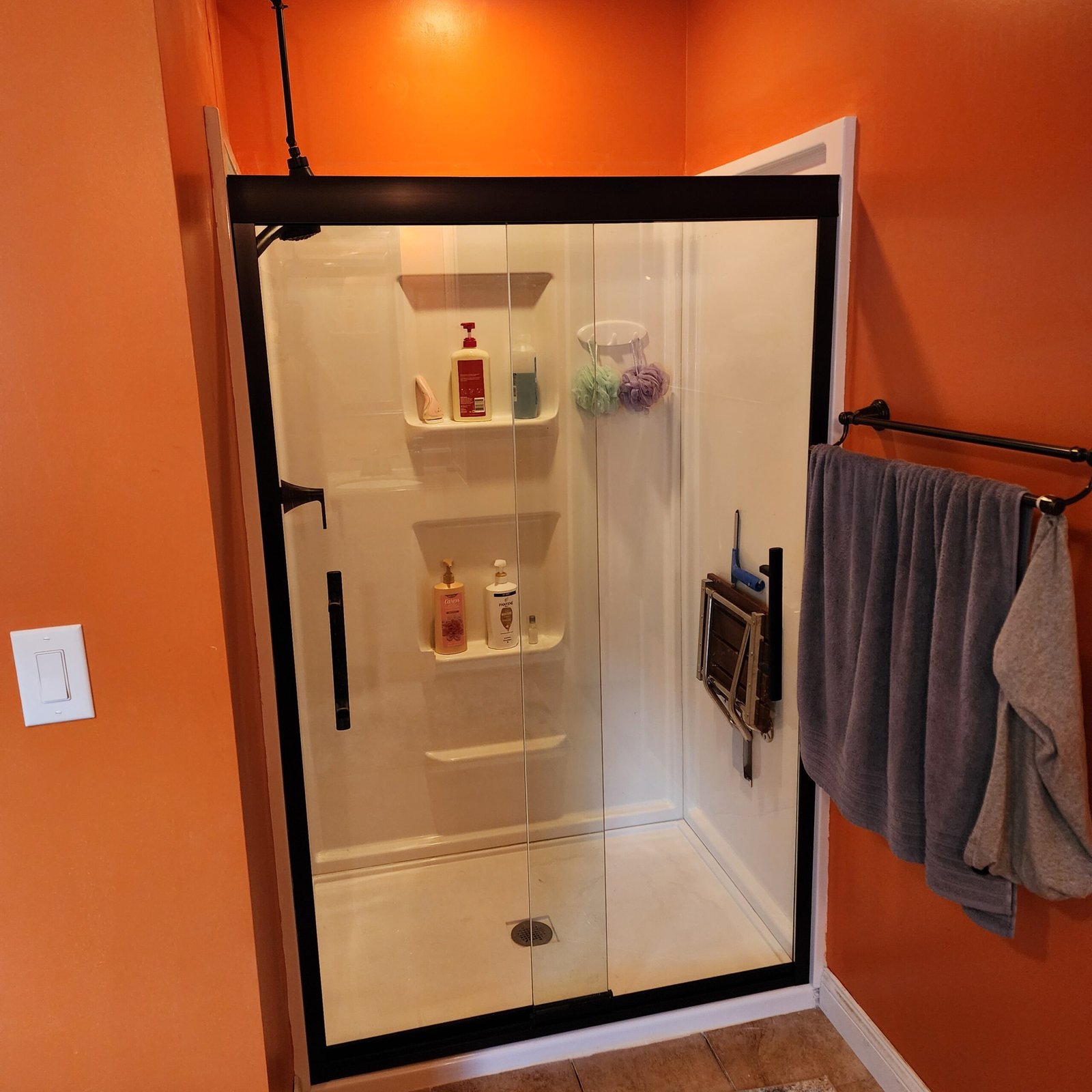
Identify the condition before choosing the solution
People often use “out of square” to describe several different problems. Basco distinguishes out-of-plumb vertical walls from out-of-level horizontal surfaces, including the curb or the top of a partial-height wall.[1] A note that says only “the shower is crooked” leaves the reviewer without enough information to choose a product.
Keep the observations separate. Does one wall lean toward the opening? Does the opening look narrower near the top? Is the concern at the curb rather than at either wall? Describe the location and direction without assuming the cause. A photograph can help communicate what you noticed, but it is not a confirmed alignment measurement.
Basco calls for final wall materials to be in place before the opening is measured and checked for level and plumb.[1] If tile work is unfinished, label the observations as preliminary. The finished surfaces are the ones the enclosure must meet.
Opening width and wall alignment are different checks
A door listing can show an opening-width range without answering every alignment question. Delta separately describes its allowance for out-of-plumb conditions and tells buyers to use the instruction guide for adjustments.[2] Treat width and alignment as separate items to confirm, not interchangeable ways to describe the same fit.
Keep the bottom, middle, and top readings on your planning sheet rather than replacing them with an average. For the measuring sequence, use our guide to measuring a shower opening. This article addresses the next decision: what to ask when those observations suggest the opening is uneven.
A useful product review should identify the exact model, the relevant manual, the location of the measured deviation, and the permitted adjustment. Ask whether the specification describes a total allowance or an allowance at each side. Do not double a total allowance because the opening has two walls.
Why the same fraction can mean different things
Delta states that its doors allow up to 3/8 inch total for out-of-plumb conditions. It says the adjustment is typically made in the rollers or blade/bumper seals and refers readers to the product instructions.[2] This is a manufacturer statement, not permission to adjust an unidentified door or a tolerance for every brand.
Basco uses that fraction in a different context. Its guidance recommends fillers for surfaces that are out of square by 3/8 inch or more. It describes a filler as matching anodized aluminum installed behind a wall jamb or under a bottom track, and says fillers are most commonly used with framed and semi-frameless doors.[1]
Those statements answer different questions. Delta describes a product adjustment allowance; Basco describes when its filler guidance becomes relevant. Neither statement establishes a universal point at which every shower door fits or fails. Ask the installer to explain which instruction applies to the proposed system and your particular opening.
Before ordering the door
Discuss the uneven opening with EazyStep Bath
Tell us which surface concerns you, whether the finishes are complete, and which door model you are considering. Keep uncertain measurements marked as uncertain.
An approved filler is part of a specific system
Basco provides separate filler supplements for pivot doors, sliding doors, and door-and-panel configurations.[1] That distinction matters when discussing a proposed solution. A general suggestion to “add a spacer” does not identify the correct component or establish that it is permitted for the door being considered.
Ask for the component name and the applicable instructions. Also ask how the finished appearance will change. Keep that answer with the product selection so that a later switch to another door does not carry over an assumption that belonged to the first system.
Basco also notes that its heavy glass can be cut out of square rather than using a filler.[1] Treat that as a custom-fabrication discussion, not a suggestion to alter glass from a boxed door. It does not establish that every custom enclosure can accommodate every opening.
Decide what needs review before you buy
Use the fit discussion to resolve the purchase, rather than to select an adjustment method yourself. If the proposed product does not have a documented solution for the observed condition, pause that selection. Ask whether a different system, a custom enclosure review, or correction of the opening is appropriate.
Record the answer in terms you can compare: the door model under review, the confirmed condition, the proposed component or change, and what remains unverified. Avoid a conclusion such as “a frameless door will solve it” without the associated product and opening details.
Alignment is one part of the wider choice. The shower door selection guide covers mounting surfaces, door movement, and the rest of the opening review. Keep those questions in the project even after the uneven-wall concern has an answer.
Questions about uneven shower openings
Is there one adjustment limit for all shower doors?
No. Check the exact manufacturer and model. Delta states an allowance of up to 3/8 inch total for its doors, but that does not establish a limit for every shower door system.
Does an out-of-square wall always need a filler?
No. Basco describes fillers for certain systems and separately discusses heavy glass cut out of square. The opening and the proposed enclosure need review together before a solution is chosen.
Should I choose a door before the tile is finished?
You can discuss possible designs earlier, but final fit should be checked against the finished opening. Basco calls for the wall material to be finalized before measuring and checking level and plumb.
These manufacturer-specific answers use the guidance below.[1][2]
Plan around the finished opening
Ask EazyStep Bath about your shower door project
EazyStep Bath serves Lexington, Jackson, Henderson County, Madison County, and nearby West Tennessee communities by appointment. Bathroom work takes place at the customer property. Tell us what is installed now and which wall or curb condition needs review.
Explore shower door installation Discuss your project Call (731) 506-1336
Sources
Manufacturer guidance reviewed September 22, 2026. Confirm the current instructions for the exact product before ordering or installation.